
How Arrest Warrants Work in Dodge County
Minnesota Rule of Criminal Procedure 3.01 sets the bar. The complaint and its supporting material must establish probable cause that an offense occurred and that this particular person committed it. Only then does the judge weigh a summons against a warrant. A warrant fits when the rule's conditions point that way. Maybe the person seems unlikely to respond. Maybe no address is known, or imminent harm needs preventing. Once signed, the order must describe the offense, set bail and other release conditions, and direct a prompt appearance before a judge. Rule 4.01 takes over from there and governs what happens after the arrest itself. Dodge County's public list compresses this whole sequence into a single phrase, complaint warrant, which tells you the route the case took but nothing about its contents.
Dodge County Complaint Warrant Label
A violation column that reads complaint warrant tells you the entry arrived through the probable-cause process, not through a missed hearing. That phrase carries real information. It also hides most of what matters. It confirms a signed criminal complaint sits behind the Dodge County entry. It stays silent on the charge, the statute, the judge, the bail amount, the conditions, and whether service has already been attempted. All of that lives in the court file. The label does help you route the call, though. A complaint warrant is neither a Court Services matter nor a payment matter. Ask the Warrants Unit about operational status, and ask Court Administration for the file itself. Bring a lawyer into the conversation before any appearance.
Arrest Warrants: What They Contain
A Dodge County arrest warrant tracks the content list in Rule 3.02. Some of those fields reach the public eye. Most never do.
| Person identified | The legal name or a description sufficient to identify the person named in the complaint. |
|---|---|
| Charged offense | The offense and its statutory classification, drawn from the complaint and its supporting facts. |
| Case identifier | The court file number, and a warrant number if one was assigned. Neither appears on the published list. |
| Bail and conditions | The amount and any non-monetary conditions the judge set, which can change after a later hearing. |
| Issuing authority | The judge who signed the order and the date it issued. |
| Direction to appear | The instruction that the person be brought promptly before the court. |
| Service and return | What happened after the order was executed or attempted, recorded in the court's event history. |
Dodge County Warrant Probable Cause
Minnesota rests every arrest warrant on a written record. A complaint states the charge. A supporting affidavit or sworn statement supplies the facts. A judge reviews both and decides whether probable cause exists. The warrant is the last step in that chain, not the first. That order of operations matters to anyone reading a public entry in Dodge County. The list confirms an order exists today. It says nothing about how the order came to be or what the court ordered with it. To understand the allegation rather than just confirm the order, the case file and your lawyer are the places to turn. The rule text itself is published on the Minnesota Revisor's Rule 3 page, which lays out the complaint and probable-cause requirements an issuing judge works from.
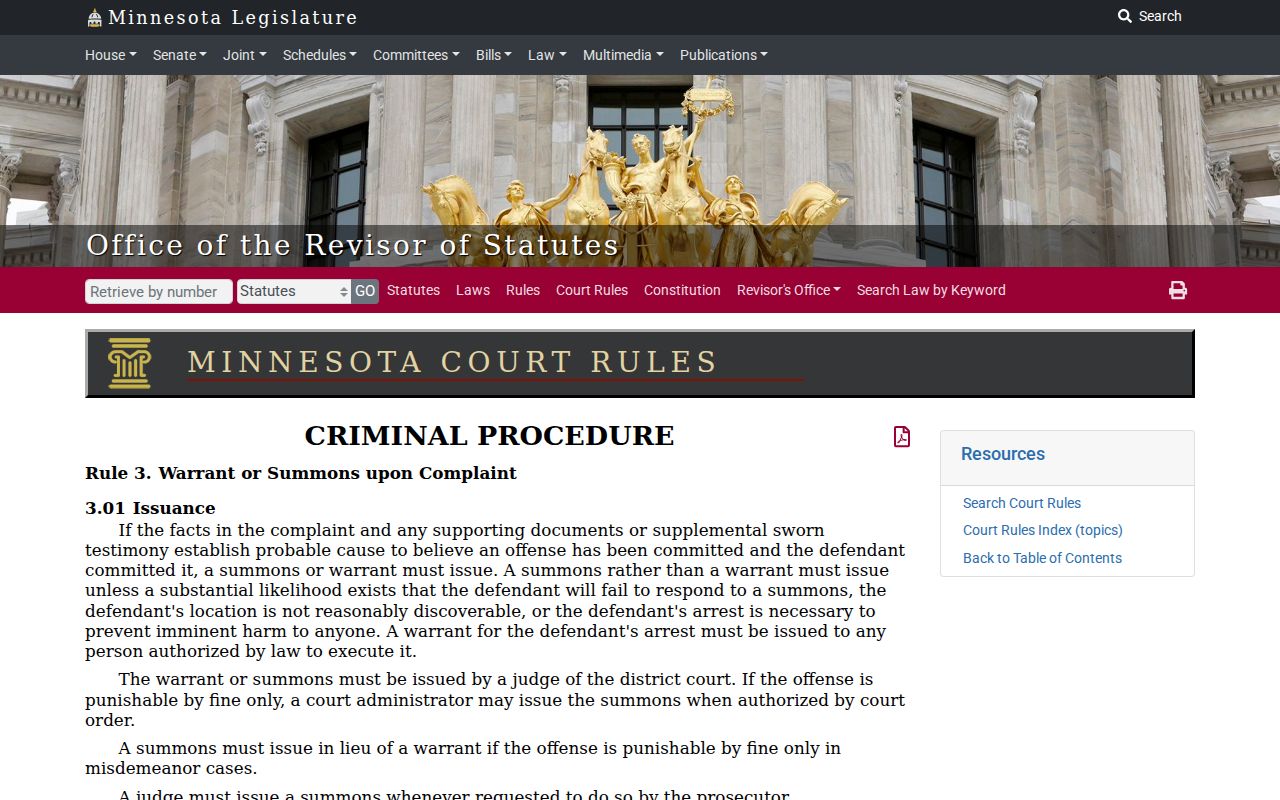
The rule page documents that probable-cause finding, the step that puts the charge and the bail amount into the court file. The court signing the order is Dodge County District Court, located in Mantorville.
How Warrants Get Served in Dodge County
The Sheriff's Office anchors warrant service across Dodge County. Deputies serve county warrants and work with the city police departments in Kasson and West Concord. A contract patrol covers Claremont, Dodge Center, Hayfield, and Mantorville as well. The Warrants Unit adds a second layer to all this. Its page describes targeted sweeps that can pull in the Sheriff's ENTRY Team along with federal, state, and local partners. So the officer at your door may not come from the agency that filed the case. What the public never sees is the service history. The active list reports no attempts, no service elsewhere, and no recall. Only the Warrants Unit knows what its system shows right now. Call 507-635-6226 before making any plan. The office describes its structure and role on the Dodge County Sheriff's Office page, which covers the department's countywide duties.
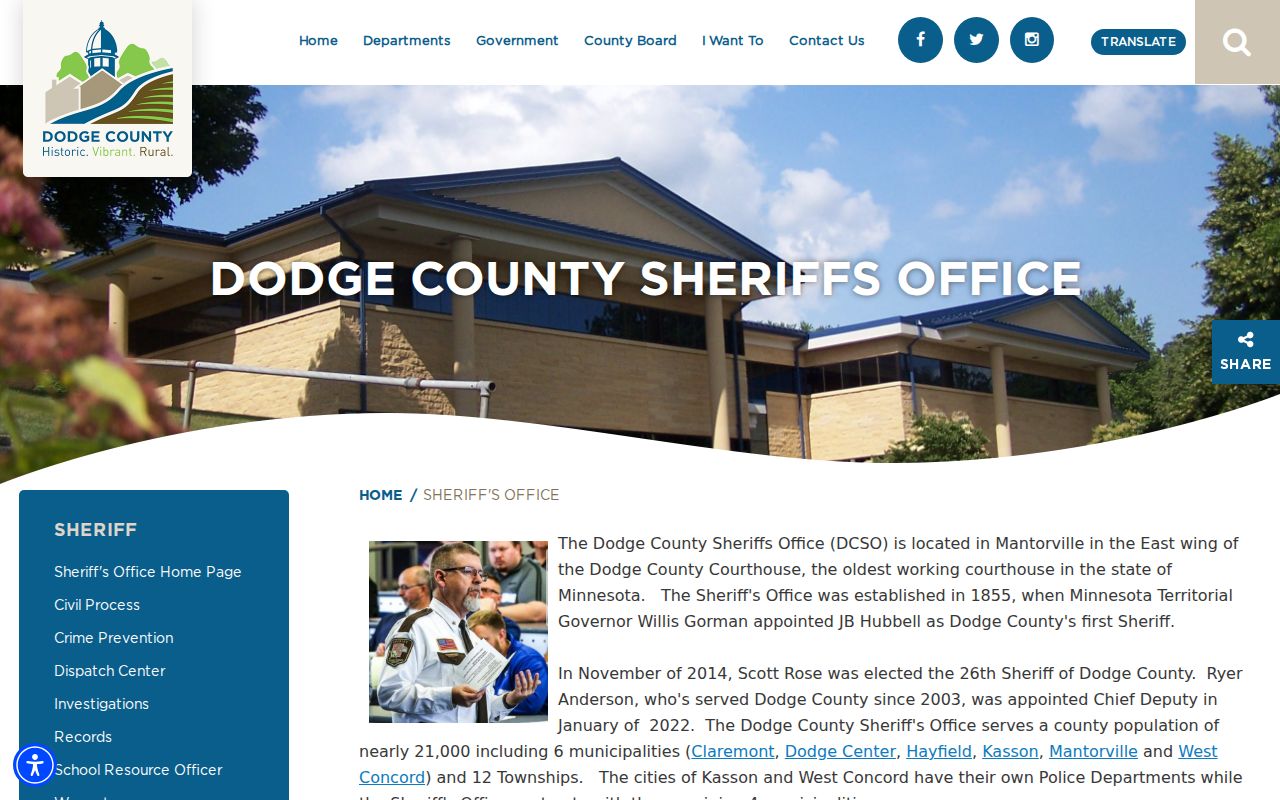
That page also documents Dodge County's split between city police departments and contracted police service. That split decides who may show up with a warrant.
Dodge County Warrant Release Rules
Body Only is the label on the Dodge County list that confuses people most. It does not mean a bond is free. It means the county shows no cash amount, because release is a judge's call, not a payment over a counter. Treat the label as an instruction to build a plan. Start by calling the Warrants Unit and Court Administration in Dodge County, asking where the case is housed and what the court wants from you. The court contact list also names the regional jail that handles Dodge County cases. That number is a routing lead, not a same-day surrender window. If custody enters the picture, know what the county does not offer. There is no walk-in surrender counter, no published bond schedule, and no online recall form. An appearance alone promises nothing about release. A lawyer is the right person to advise on timing and approach.
Arrest Warrants, Summonses, and Bench Warrants
Three documents can pull a person into Dodge County court. Only one authorizes an arrest on sight. The differences matter when you decide how to respond.
| Document | What It Does | Typical Trigger |
|---|---|---|
| Summons | Orders an appearance without authorizing arrest | Standard first step on a complaint |
| Arrest warrant | Authorizes custody and a prompt appearance | Probable cause plus a Rule 3 condition |
| Bench or FTA warrant | Enforces a missed court obligation | Absence from a scheduled hearing |
| Sign-and-release warrant | Non-arrest notice of a new date | Qualifying failure to appear |
A summons is not a warrant. A bench warrant does not add a new charge either. Reading the actual Dodge County document you received clears up most of the confusion.
Dodge County Warrants and Federal Cases
A federal arrest warrant takes a different path from the start. Federal magistrate judges and district judges issue them on a complaint, indictment, or other charging document. Federal officers then serve them, usually through the U.S. Marshals Service. Dodge County systems will not find these cases. The court case search stops at the state line. The county list has no federal entries, and the Warrants Unit can only confirm or direct on the local record. Sealed federal material may not appear in any public docket either. PACER is the federal docket system, and the U.S. Marshals district office handles federal service in Minnesota. A lawyer is the practical starting point for any federal matter.
Handling an Arrest Warrant in Your Name
An active arrest warrant in your name is urgent, but panic helps no one. Preparation pays off here. The first step in Dodge County is a conversation, not a drive to Mantorville.
Important: Contact a licensed Minnesota attorney before any voluntary appearance, and never pay a caller who says a warrant requires immediate payment.
Talk with counsel about a voluntary appearance, a surrender arrangement, a motion, or a bail application. Then confirm the practical details. Which Dodge County court issued the order? Ask what the current bail or release label is, where the case is housed, and which documents to bring.
Confirming Dodge County Warrants Cleared
A payment, a hearing, or a phone call does not clear a Dodge County warrant by itself. The court has to record the event first. Then the record must reach the systems that publish it. Keep every receipt, order, and written notice. Ask Court Administration which event changed the order and whether a copy exists. Ask the Warrants Unit when its system and the public list will reflect the change. If the matter began as a traffic citation, check separately for late penalties, a license notice, or a collections entry. Those travel on different records than the warrant itself. Eligible cases also show up in Minnesota Court Records Online, which lists case events rather than warrant status. The county warrant records home page carries the full confirmation sequence, including the records request route for anything that never appears online.